Full Moon in Astrology: Meaning, Zodiac Signs & Lunar Cycle
A Full Moon is one of the most recognizable phases of the lunar cycle. It occurs when the Moon's Earth-facing side appears fully illuminated by sunlight. In Western astrology, this phase has a particular significance because the Sun and Moon occupy opposite positions in the zodiac.
Astrologers interpret this alignment through themes such as awareness, culmination, contrasting needs, and the relationship between personal intentions and emotional responses. The zodiac sign of the Full Moon and its position in an individual birth chart provide additional context for these interpretations.
Understanding the astronomy behind the lunar phase, along with the astrological symbolism attached to it, helps distinguish observable facts from traditional interpretations.
What Is a Full Moon?
A Full Moon occurs when the Moon is approximately opposite the Sun in the sky as viewed from Earth. At this point, the side of the Moon facing Earth is illuminated almost completely by sunlight, giving it its familiar round appearance.
The Moon does not produce its own visible light. It reflects sunlight, and the changing positions of the Sun, Earth, and Moon determine how much of its illuminated surface can be seen from Earth.
A Full Moon is an exact astronomical moment, rather than simply the entire night when the Moon looks round. It can occur during daylight at a particular location, even though the Moon may appear full to observers later that evening.
The average interval from one Full Moon to the next is approximately 29.5 days. This period is known as a synodic month and forms the basis of the familiar lunar phase cycle.
The Four Main Phases of the Moon
The lunar cycle is commonly divided into four primary phases. These describe the changing appearance of the Moon as it travels around Earth.
- New Moon: The Moon is positioned between Earth and the Sun. Its illuminated side faces mostly away from Earth, so it is generally difficult to see.
- First Quarter: Approximately half of the Moon's visible surface appears illuminated as the Moon moves through the waxing part of its cycle.
- Full Moon: The Moon appears almost fully illuminated from Earth because it is opposite the Sun.
- Last Quarter: Approximately half of the visible surface is illuminated again, this time during the waning part of the cycle.
The terms waxing and waning describe whether the illuminated portion visible from Earth is increasing or decreasing. Waxing occurs between the New Moon and Full Moon, while waning occurs between the Full Moon and the next New Moon.
What Does a Full Moon Represent in Astrology?
In Western astrology, the Full Moon is associated with an opposition between the Sun and Moon. The Sun is traditionally linked with identity, conscious direction, and personal expression, while the Moon represents emotional responses, familiar patterns, and instinctive needs.
Because these two planets occupy opposite zodiac positions, astrologers often interpret a Full Moon as a symbolic meeting of contrasting priorities. It can bring attention to questions involving personal needs and responsibilities, independence and cooperation, or private concerns and public commitments.
Full Moons are also associated with culmination. A matter that began developing earlier in the lunar cycle may reach a visible stage, although this is an interpretive theme rather than a guaranteed event.
The meaning of an individual Full Moon depends on more than its general phase. Astrologers also examine its zodiac sign, degree, planetary aspects, and relationship with the natal chart.
Why Are the Sun and Moon Opposite During a Full Moon?
The astronomical Full Moon occurs near the point when the Moon and Sun have a difference of approximately 180 degrees in their apparent positions along the ecliptic. In astrology, this alignment is described as an opposition aspect.
The opposition is important because it connects two opposite zodiac signs. These signs belong to the same axis and are traditionally interpreted through related but contrasting themes.
For example, an Aries-Libra Full Moon axis is commonly associated with the relationship between individual initiative and cooperation. A Taurus-Scorpio axis is often interpreted through material stability, shared resources, attachment, and change.
An opposition does not automatically indicate conflict or a negative outcome. In astrological interpretation, it can represent two areas that require consideration together.
You can explore the meanings of zodiac signs and planetary relationships in our guides to zodiac signs and astrological aspects.
Full Moon Meaning Through the Zodiac Signs
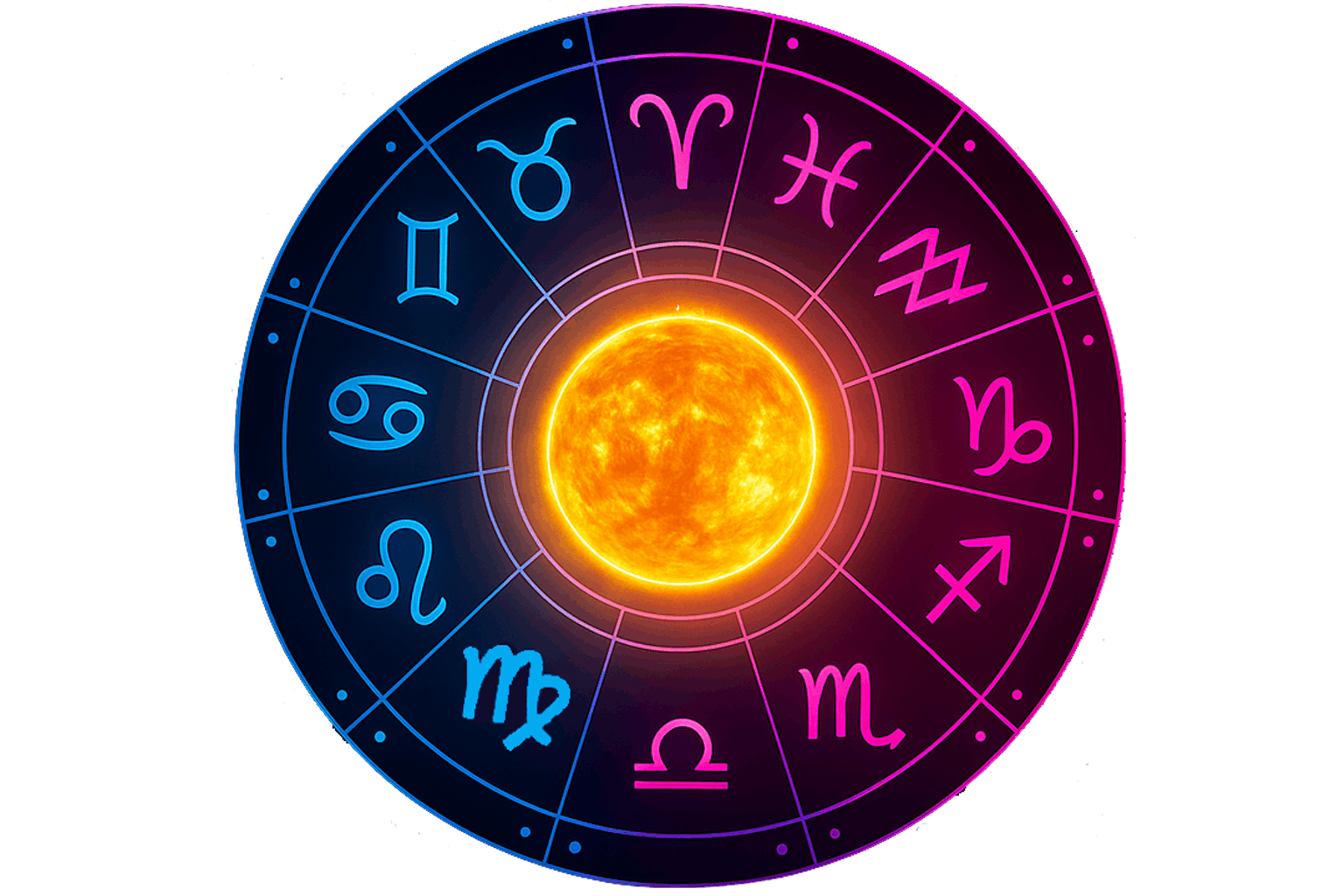
The zodiac sign occupied by the Full Moon provides the starting point for its traditional astrological interpretation. Each Full Moon also occurs opposite the Sun in the corresponding sign. The following descriptions explain the symbolic themes astrologers commonly associate with these six axes.
Aries Full Moon – Libra Sun
This axis is associated with individual action and cooperation. Astrologers may examine how personal priorities are balanced with commitments involving partners, colleagues, or other people.
Taurus Full Moon – Scorpio Sun
Taurus and Scorpio are often connected with possessions, security, shared resources, attachment, and personal values. This Full Moon axis is interpreted through the balance between maintaining stability and responding to necessary changes.
Gemini Full Moon – Sagittarius Sun
This combination is associated with information and broader understanding. Gemini represents curiosity and immediate communication, while Sagittarius is traditionally connected with beliefs, education, and wider perspectives.
Cancer Full Moon – Capricorn Sun
The Cancer-Capricorn axis is commonly interpreted through emotional security and external responsibilities. Astrologers may consider the relationship between home life, family concerns, professional commitments, and long-term obligations.
Leo Full Moon – Aquarius Sun
Leo and Aquarius are associated with individual creativity and collective participation. Their opposition can be interpreted through personal recognition, self-expression, friendships, and involvement in groups.
Virgo Full Moon – Pisces Sun
This axis connects practical organisation with imagination and intuition. Virgo is traditionally associated with analysis, routines, and detail, while Pisces is connected with sensitivity, imagination, and broader emotional understanding.
These descriptions are general sign-axis interpretations. They do not describe how every person will experience a particular Full Moon.
Full Moon in an Individual Birth Chart
In natal astrology, a Full Moon can be examined in relation to the houses, planets, and sensitive points in a person's birth chart. Its position may indicate which area of life an astrologer chooses to examine during that lunar cycle.
The House Placement
The house containing the transiting Full Moon is often considered when interpreting its possible personal themes. For example, astrologers may connect a Full Moon passing through the fourth house with home and family matters, or one passing through the tenth house with professional responsibilities and public roles.
The exact house placement depends on the birth chart calculation and house system being used. Birth time can therefore make an important difference to this part of the interpretation.
Aspects to Natal Planets
Astrologers also examine whether the Full Moon forms significant aspects to planets in the natal chart. A close contact with natal Saturn, for example, may be interpreted differently from a contact with natal Venus or Mars.
The type of aspect, its degree of closeness, and the condition of the planets involved all contribute to an individual interpretation. A general Full Moon horoscope cannot account for all these details.
If you want to understand how the Moon and other planetary placements fit into your own chart, you can explore our Birth Chart Report.
Full Moon and Emotional Interpretations
The Moon has a long-standing symbolic association with emotions and instinctive responses in Western astrology. For this reason, Full Moons are often discussed in connection with emotional themes, personal reactions, and relationships.
Some astrologers interpret the opposition between the Sun and Moon as a point where conscious priorities and emotional needs become easier to examine. This symbolism may be used to discuss situations in which someone is balancing personal expectations with the needs of other people.
However, it is important to distinguish an astrological interpretation from a scientific claim. A Full Moon does not establish that a person will become unusually emotional, experience relationship difficulties, or make a particular decision.
Individual feelings are influenced by many factors, including personal circumstances, sleep, health, stress, and the surrounding environment. The lunar phase alone cannot explain a person's emotional state.
Full Moon, Spring Tides, and the Natural World
The Full Moon also has a measurable relationship with ocean tides. Around both the Full Moon and New Moon, the gravitational effects of the Sun and Moon combine to produce spring tides. These generally have a greater tidal range than neap tides, which occur around the quarter phases.
Spring tides do not necessarily mean that every coastal location will experience flooding. Actual tidal levels depend on local geography, weather, coastal conditions, and other factors.
This is a useful distinction when reading about Full Moon energy. The gravitational relationship between the Sun, Moon, and oceans is a physical phenomenon. Claims that lunar phases directly determine an individual's personality or emotional behaviour are a separate matter and are not established by tidal science.
Full Moon Traditions and Common Rituals
Different cultures and spiritual communities have developed their own ways of observing the Full Moon. The practices are not universal, and their meanings depend on the particular tradition and the people who follow it.
Some modern spiritual practices include:
- Journaling: Writing down personal experiences, current concerns, or changes noticed over the previous weeks.
- Meditation: Spending quiet time concentrating on breathing or observing thoughts.
- Gratitude practices: Recording experiences or people that someone appreciates.
- Reviewing intentions: Comparing current priorities with goals established earlier in the lunar cycle.
- Cultural observances: Participating in religious or community events connected with particular lunar calendars and traditions.
These activities can have personal or cultural meaning for participants. There is no scientific requirement to perform a ritual during a Full Moon, and no particular practice guarantees a specific result.
Full Moon vs. New Moon: What Is the Difference?
The Full Moon and New Moon are opposite points in the lunar phase cycle. In astronomy, the difference comes from the changing positions of the Moon, Earth, and Sun. In astrology, the two phases are given contrasting symbolic meanings.
- New Moon: Occurs when the Moon and Sun are in approximately the same zodiac position. Astrologers commonly associate it with beginnings, intentions, and the start of a new cycle.
- Full Moon: Occurs when the Moon and Sun are approximately opposite each other. Its traditional symbolism includes culmination, awareness, and the examination of contrasting needs.
In a typical lunar cycle, the New Moon comes before the Full Moon. The waxing period separates the two, followed by the waning period leading toward the next New Moon. This sequence is the basis for many lunar timing practices in astrology.
Is the Full Moon Scientifically Proven to Affect Human Behaviour?
The Full Moon is an established astronomical phase, and its effects on sunlight reflected from the Moon and gravitational tidal patterns can be measured.
However, claims that the Full Moon reliably causes unusual behaviour, emotional instability, relationship problems, or changes in decision-making are not supported by consistent scientific evidence. Research into possible lunar associations with sleep and behaviour has produced mixed findings, and it does not establish the broad claims often found in popular discussions.
Astrology approaches the Full Moon through symbolism and traditional chart interpretation rather than experimentally established cause and effect. Keeping that distinction clear allows readers to explore astrological ideas without treating them as scientific conclusions.
Frequently Asked Questions About Full Moon Astrology
Does a Full Moon last for only one night?
The exact Full Moon is a specific astronomical moment. The Moon can look nearly full for a night or two around that moment, depending on viewing conditions and location. Its appearance changes gradually rather than switching from full to a different phase immediately.
Why does a Full Moon sometimes appear larger near the horizon?
The Moon can appear larger when it is close to the horizon. This is commonly known as the Moon illusion. Its apparent size is not necessarily larger because of the Full Moon phase; the effect is mainly related to human visual perception.
What is a Supermoon?
A Supermoon generally refers to a Full Moon that occurs near the Moon's closest approach to Earth in its orbit, known as perigee. It can appear somewhat larger and brighter than a more distant Full Moon, although the difference may be difficult to notice without comparison.
Does every Full Moon have a different zodiac sign?
Full Moons move through the zodiac over the course of the year. Their sign depends on the Moon's position at the exact Full Moon moment. The Sun is in the opposite sign at that time.
Can the Full Moon be seen everywhere on Earth?
The Moon can be observed from locations where it is above the horizon and weather conditions allow visibility. However, the exact local time of the Full Moon and whether it occurs during daylight or nighttime differ by location.
Conclusion
The Full Moon is both a clearly defined astronomical phase and an important symbol in Western astrology. Its position opposite the Sun provides the basis for interpretations involving zodiac sign relationships, chart houses, planetary aspects, and the themes of culmination and contrast.
Cultural and spiritual traditions have developed different ways of observing this lunar phase, while scientific explanations help clarify what can be measured and what remains a matter of belief. Understanding both perspectives makes it possible to explore Full Moon astrology with greater context and without relying on exaggerated claims.