WESTERN ASTROLOGY GUIDE
The 12 Zodiac Signs Explained: Dates, Meanings & Traits
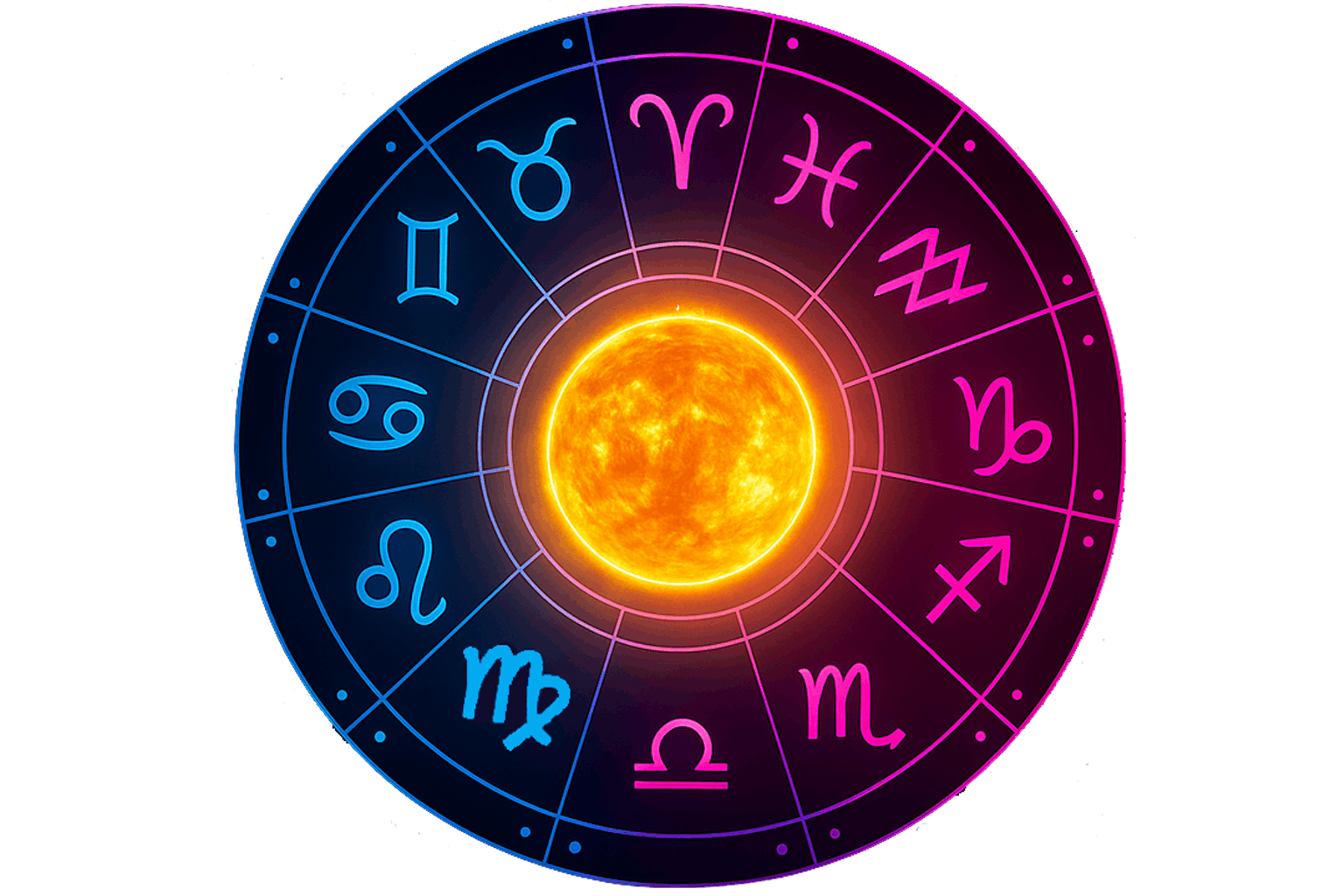
The twelve zodiac signs form the basic framework of Western astrology. Each sign is associated with a particular section of the zodiac, a symbol, an element, a modality and one or more traditional or modern planetary rulers. These associations provide a vocabulary for interpreting planetary positions in a birth chart.
Knowing your Sun sign is a useful starting point, but it is only one part of an astrological chart. The Moon sign, Rising sign, planetary placements and relationships between planets add different layers to an interpretation. This guide explains the twelve signs, their approximate dates and the astrological concepts used to understand them.
What Is the Zodiac in Western Astrology?
In Western tropical astrology, the zodiac is a circle of 360 degrees divided into twelve equal sections of 30 degrees. Each section is assigned the name and symbolism of one zodiac sign, beginning with Aries at the March equinox. The Sun, Moon and planets are interpreted according to the signs they occupy along this zodiac.
The zodiac signs are not the same thing as the astronomical constellations that share their names. The constellations have different apparent sizes and boundaries, whereas the tropical zodiac uses twelve equal divisions measured from the seasonal starting point of Aries. Because of the gradual shift in the Earth's orientation known as precession, the tropical signs and the visible constellations no longer line up in the same way they did in ancient times.
This guide follows the tropical zodiac commonly used in Western astrology. Sidereal astrology uses a different reference system, so sign placements and dates can differ between the two approaches.
The 12 Zodiac Signs and Their Dates
The following date ranges are commonly used for the tropical zodiac. They are approximate calendar guides, not fixed astronomical dates for every year. The Sun changes signs at a specific time, so people born near a boundary date may need their birth year, time and location checked to establish the correct Sun sign.
| Zodiac Sign | Approximate Dates | Symbol |
|---|---|---|
| Aries | March 21 – April 19 | Ram |
| Taurus | April 20 – May 20 | Bull |
| Gemini | May 21 – June 20 | Twins |
| Cancer | June 21 – July 22 | Crab |
| Leo | July 23 – August 22 | Lion |
| Virgo | August 23 – September 22 | Maiden |
| Libra | September 23 – October 22 | Scales |
| Scorpio | October 23 – November 21 | Scorpion |
| Sagittarius | November 22 – December 21 | Archer |
| Capricorn | December 22 – January 19 | Sea-Goat |
| Aquarius | January 20 – February 18 | Water Bearer |
| Pisces | February 19 – March 20 | Fish |
Birth date near a sign change? A calendar date alone may not be enough to identify your Sun sign. The exact transition time changes from year to year. A birth chart calculation using the correct birth details provides a more reliable result.
Understanding Each Zodiac Sign
Each sign has its own symbolism and traditional interpretation. The descriptions below explain the themes associated with each sign, including the qualities astrologers commonly emphasise and the tendencies that may require more attention.
Aries (March 21 – April 19)
Symbol: Ram | Element: Fire | Modality: Cardinal | Ruling Planet: Mars
Aries is associated with beginnings, initiative and direct action. As the first sign of the zodiac, it represents the impulse to start something rather than wait for circumstances to become ideal. In traditional interpretations, Mars gives Aries a connection with competition, courage, assertion and the willingness to confront obstacles.
This emphasis on acting quickly can be useful when a situation requires a clear decision. However, Aries symbolism also raises questions about impatience, reacting before considering the consequences and losing interest once the initial challenge has passed. Its cardinal modality describes an initiating approach, while its fire element relates to enthusiasm and active expression.
Taurus (April 20 – May 20)
Symbol: Bull | Element: Earth | Modality: Fixed | Ruling Planet: Venus
Taurus is connected with material resources, personal values, comfort and the things that make life feel secure. Its earth element gives it a practical orientation, while Venus links the sign with pleasure, aesthetics, affection and the appreciation of quality. Taurus is often interpreted through its relationship with possessions, finances, food, nature and physical surroundings.
The fixed modality describes a preference for continuity and consistency. This can support patience and sustained effort, but it can also make changing an established routine or opinion difficult. In a birth chart, Taurus placements are often considered in relation to what a person values and how they approach stability.
Gemini (May 21 – June 20)
Symbol: Twins | Element: Air | Modality: Mutable | Ruling Planet: Mercury
Gemini represents communication, information exchange and the movement between different ideas. Its planetary ruler, Mercury, is associated with language, learning, reasoning and everyday communication. Gemini symbolism therefore includes asking questions, comparing viewpoints, gathering information and making connections between subjects.
Its mutable modality is associated with adaptability and changing circumstances. This can make Gemini placements receptive to new information, although too many interests can sometimes divide attention. The Twins symbol is often used to describe the sign's ability to consider more than one perspective rather than a literal division of personality.
Cancer (June 21 – July 22)
Symbol: Crab | Element: Water | Modality: Cardinal | Ruling Planet: Moon
Cancer is associated with home, family, memory, belonging and emotional security. The Moon, its ruler, is linked in astrology with changing feelings, habits, instincts and personal needs. Cancer interpretations often focus on the importance of familiar surroundings and the relationships that provide a sense of connection.
The Crab symbol reflects the contrast between a protective exterior and a more sensitive inner world. Cancer's cardinal modality adds an initiating quality to its protective themes: care may be expressed through taking responsibility for a household, supporting relatives or creating a secure environment. At times, caution or attachment to the familiar can make unfamiliar situations harder to approach.
Leo (July 23 – August 22)
Symbol: Lion | Element: Fire | Modality: Fixed | Ruling Planet: Sun
Leo is connected with creative expression, recognition, performance and individual identity. Its ruler, the Sun, represents vitality and the central sense of self in astrological interpretation. Leo themes frequently appear in discussions of artistic work, leadership, personal visibility and the desire to contribute something recognisable.
Its fixed modality can support commitment to a creative direction and consistency in personal expression. The same quality may also make it difficult to accept criticism or share attention. Leo's symbolism is not simply about being noticed; it also concerns the way a person expresses individuality and responds to appreciation.
Virgo (August 23 – September 22)
Symbol: Maiden | Element: Earth | Modality: Mutable | Ruling Planet: Mercury
Virgo is associated with analysis, organisation, practical skills and attention to detail. Its ruler Mercury connects it with information and reasoning, while its earth element gives these themes a practical focus. Virgo is often considered when interpreting work methods, routines, problem-solving and the process of improving a task.
The mutable modality gives Virgo an ability to adjust methods when circumstances change. Its critical eye can help identify errors and refine complicated work, but it can also lead to excessive fault-finding or unrealistic standards. Virgo symbolism is therefore closely connected with the difference between useful precision and perfectionism.
Libra (September 23 – October 22)
Symbol: Scales | Element: Air | Modality: Cardinal | Ruling Planet: Venus
Libra is associated with partnership, negotiation, fairness and social exchange. Venus, its ruler, connects the sign with attraction, aesthetics and the values people bring into relationships. Its air element places emphasis on discussion, comparison and the consideration of different viewpoints.
The Scales represent the process of weighing alternatives rather than assuming that every disagreement has a simple answer. Libra's cardinal modality can be seen in its tendency to establish connections and initiate cooperation. A possible difficulty is spending too long considering competing options or avoiding necessary disagreement in order to preserve harmony.
Scorpio (October 23 – November 21)
Symbol: Scorpion | Element: Water | Modality: Fixed | Traditional Ruler: Mars | Modern Ruler: Pluto
Scorpio is linked with privacy, trust, shared resources, intimacy and significant personal change. In traditional astrology, Mars rules Scorpio and brings themes of determination, conflict and self-protection. Modern Western astrology also associates Pluto with the sign, adding symbolism connected with power, control, hidden matters and transformation.
Scorpio's fixed modality is associated with persistence and sustained emotional involvement. It can describe a strong desire to understand what lies beneath the surface of a situation. The more difficult side of this symbolism includes suspicion, holding on to resentment or finding it difficult to relinquish control. Mars and Pluto are separate planetary influences in interpretation, even though both are used as rulers of Scorpio in different astrological traditions.
Sagittarius (November 22 – December 21)
Symbol: Archer | Element: Fire | Modality: Mutable | Ruling Planet: Jupiter
Sagittarius is associated with higher learning, philosophy, travel, belief systems and the search for a wider understanding of the world. Jupiter, its ruler, represents expansion, teaching, opportunity and the development of ideas. The Archer symbol reflects the tendency to direct attention towards a distant goal or a larger question.
Its mutable modality allows it to move between different experiences and viewpoints. This can support intellectual curiosity and interest in unfamiliar subjects. However, broad conclusions may sometimes be reached before the details have been checked. Sagittarius symbolism therefore includes both the pursuit of knowledge and the need to examine the assumptions behind personal beliefs.
Capricorn (December 22 – January 19)
Symbol: Sea-Goat | Element: Earth | Modality: Cardinal | Ruling Planet: Saturn
Capricorn is connected with responsibility, professional structures, long-term objectives and the use of time and resources. Saturn, its ruler, is associated with limits, discipline, obligations, experience and the consequences of decisions. The Sea-Goat symbol combines a connection with practical life and the effort to reach difficult or distant aims.
Its cardinal modality gives Capricorn an initiating quality in matters involving planning and organisation. It is often interpreted through the way a person approaches duties, authority and measurable progress. A potential difficulty is giving obligations so much importance that rest, flexibility or personal relationships receive too little attention.
Aquarius (January 20 – February 18)
Symbol: Water Bearer | Element: Air | Modality: Fixed | Traditional Ruler: Saturn | Modern Ruler: Uranus
Aquarius is associated with groups, shared ideas, social systems and approaches that differ from established conventions. Traditional astrology assigns Saturn as its ruler, connecting it with structure, responsibility and collective organisation. Modern Western astrology also uses Uranus, which is associated with innovation, disruption and unconventional thinking.
Its air element emphasises ideas and social exchange, while its fixed modality describes commitment to particular principles or viewpoints. Aquarius symbolism can be useful when examining how someone relates to communities and group objectives. Its independent outlook may sometimes become detachment or resistance to practical compromise.
Pisces (February 19 – March 20)
Symbol: Fish | Element: Water | Modality: Mutable | Traditional Ruler: Jupiter | Modern Ruler: Neptune
Pisces is associated with imagination, compassion, dreams, art and experiences that are difficult to define through logic alone. Traditional astrology assigns Jupiter as its ruler, linking the sign with faith, meaning and broader understanding. Modern Western astrology also associates Neptune with Pisces, bringing themes of imagination, idealism, sensitivity and blurred boundaries.
Its mutable modality relates to adaptability and responsiveness to changing circumstances. Pisces symbolism is often used when interpreting creative interests and sensitivity to the atmosphere around other people. A possible challenge is having difficulty separating personal expectations from what is actually happening, particularly when boundaries are unclear.
The Four Zodiac Elements
The four elements group the zodiac signs according to broad symbolic approaches to experience. They are not physical substances inside a person. In astrology, they describe different styles of expression and the kinds of themes associated with each sign.
Fire: Aries, Leo and Sagittarius
Fire signs are traditionally connected with action, enthusiasm, confidence and the expression of personal will. Their symbolism is often considered in relation to initiative, creative energy and the desire to pursue an objective. When interpreted in excess, fire can also suggest impatience or acting without enough consideration.
Earth: Taurus, Virgo and Capricorn
Earth signs relate to practical matters, material conditions, resources and tangible results. Their interpretations often involve how people organise work, manage responsibilities and respond to physical or financial realities. An excessive emphasis on certainty can sometimes make adaptation difficult.
Air: Gemini, Libra and Aquarius
Air signs are associated with thought, communication, learning and social interaction. Their symbolism concerns the exchange of information and the ability to consider ideas from different perspectives. Too much emphasis on analysis can sometimes make it harder to move from discussion to action.
Water: Cancer, Scorpio and Pisces
Water signs are linked with emotional experience, memory, attachment and sensitivity. Astrologers often use this element when discussing private feelings and personal bonds. Its more challenging expressions may involve becoming overwhelmed by emotions or finding it difficult to maintain clear boundaries.
Cardinal, Fixed and Mutable Signs
Modality describes how a zodiac sign is traditionally understood to approach activity and change. Each element contains one cardinal, one fixed and one mutable sign.
Cardinal Signs: Aries, Cancer, Libra and Capricorn
Cardinal signs are associated with beginnings and the initiation of activity. Their symbolism focuses on starting projects, establishing directions and responding to situations by taking the first step. Their challenge can be maintaining momentum after the initial stage.
Fixed Signs: Taurus, Leo, Scorpio and Aquarius
Fixed signs represent continuity, concentration and persistence. They are traditionally linked with maintaining what has already been established and giving an activity time to develop. Their resistance to sudden changes can sometimes become inflexibility.
Mutable Signs: Gemini, Virgo, Sagittarius and Pisces
Mutable signs are associated with adjustment, transition and the ability to work with changing conditions. Their symbolism involves adapting methods or perspectives when new information becomes available. A possible difficulty is spreading attention across too many alternatives.
Traditional and Modern Ruling Planets
Each zodiac sign has a planetary ruler in traditional Western astrology. The ruler is used as an additional interpretive factor when astrologers examine the sign's themes and its placement in a birth chart.
Modern Western astrology introduced Uranus, Neptune and Pluto into the rulership system after their astronomical discoveries. Some astrologers use these planets as modern rulers of Aquarius, Pisces and Scorpio, while traditional astrology retains Saturn, Jupiter and Mars respectively.
Both systems are used today, but they should not be presented as if there were no difference between them. A chart interpretation is clearer when it states which rulership approach it follows.
Sun Sign, Moon Sign and Rising Sign
The three placements commonly discussed in introductory astrology describe different parts of a birth chart. They are not interchangeable, and knowing only the Sun sign does not provide a complete chart interpretation.
Sun Sign
The Sun sign is determined by the zodiac sign occupied by the Sun at the time of birth. It is commonly interpreted in relation to identity, conscious direction, vitality and the way a person expresses individuality. Most newspaper and website horoscope categories are based on this placement.
Moon Sign
The Moon sign is based on the Moon's position at birth. In astrology, it is associated with emotional responses, familiar habits, memory and personal needs. Because the Moon moves relatively quickly through the zodiac, an accurate birth time can be especially useful when it is close to a sign boundary.
Rising Sign or Ascendant
The Rising sign is the zodiac sign appearing on the eastern horizon at the time and location of birth. It is used to interpret the approach a person takes towards new situations and the way the birth chart is organised. Birth time is particularly important for calculating the Ascendant accurately.
These placements work together in a chart. For example, a person's Sun sign may describe one set of central themes, while the Moon sign and Ascendant add different considerations about emotional responses and outward approach.
Are Zodiac Signs and Astrology Houses the Same?
No. Zodiac signs and houses are two different divisions used in a birth chart. The zodiac is divided into twelve equal signs, while the twelve houses describe different areas of life in an individual chart. Houses are calculated using the birth time and geographical location, along with the house system selected.
For example, astrologers traditionally associate the first house with identity and personal presentation, the second with resources and values, the seventh with partnerships, and the tenth with public responsibilities and career-related matters. These are house topics, not fixed meanings belonging to the corresponding zodiac signs.
Aries is therefore not automatically in the first house for every person, Taurus is not automatically in the second, and so on. The Ascendant determines the starting point of the house arrangement. The same zodiac sign can occupy different houses in different people's charts.
A sign describes the style or symbolism through which a planet is interpreted; a house identifies the area of life in which that planet's placement is considered. Keeping these two concepts separate is essential for understanding a birth chart.
How Is Zodiac Compatibility Interpreted?
Zodiac compatibility is often introduced through Sun-sign comparisons, but a full astrological relationship interpretation involves more than matching two signs. Astrologers may compare the Moon, Venus, Mars, Ascendants and the aspects formed between the two birth charts.
Element and modality are useful starting points. For example, two signs from the same element may share a broad symbolic approach, while signs with different modalities may respond differently to planning, change or decision-making. These patterns are interpretive guidelines, not guarantees about whether two people will get along.
A Sun-sign pairing cannot establish the quality or future of a real relationship. Communication, personal values, circumstances and individual choices matter outside an astrological chart.
How to Read Zodiac Signs in a Birth Chart
A birth chart places the planets in zodiac signs and houses for a particular date, time and location. Rather than reading each sign as a separate personality description, astrologers consider how the placements relate to one another.
- Planet: Identifies the function or subject being interpreted, such as communication, affection or responsibility.
- Sign: Describes the style traditionally associated with that planetary placement.
- House: Shows the area of life in which the placement is interpreted.
- Aspect: Describes the angular relationship between planets and how their symbolism is considered to interact.
This is why two people with the same Sun sign can have very different birth charts. Their Moon signs, Ascendants, planetary placements, houses and aspects may all differ.
Frequently Asked Questions About Zodiac Signs
How many zodiac signs are there in Western astrology?
The Western tropical zodiac has twelve signs, each covering an equal 30-degree section of the zodiac circle.
Can someone be born between two zodiac signs?
A person is not assigned two Sun signs simply because their birthday falls near a boundary. The Sun occupies one zodiac position at a particular moment. Birth year, time and location help establish which sign it was in.
Why do some astrology websites give different zodiac dates?
Published date ranges are often rounded to calendar days. The Sun's actual sign-change time varies each year, and tropical and sidereal astrology use different reference systems. These differences can affect dates shown near the beginning or end of a sign.
Do I need my birth time to know my zodiac sign?
For a Sun sign that is not near a sign boundary, the birth date is usually sufficient for a basic identification. An exact birth time and location are useful for checking boundary cases and are needed to calculate the Ascendant and houses accurately.
Is a zodiac sign the same as a constellation?
No. The twelve signs in Western tropical astrology are equal 30-degree divisions of the zodiac. The astronomical constellations have different sizes and boundaries, so they do not correspond exactly to the tropical signs.
Conclusion
The twelve zodiac signs provide a basic framework for understanding the symbolism used in Western astrology. Their elements, modalities and planetary rulers help describe different interpretive themes, while the Moon, Ascendant, houses and aspects add information that a Sun sign alone cannot provide.
Learning the distinction between signs, planets and houses makes it easier to read a birth chart without treating a single zodiac label as a complete description of a person.
Disclaimer: Astrology is a traditional interpretive belief system and is not scientifically established as a method for determining personality or predicting events. The information on AstroLifeTruth is provided for general educational and entertainment purposes only. It should not replace professional medical, legal, financial or psychological advice.