LEARN ASTROLOGY
The Four Elements in Astrology: Fire, Earth, Air and Water
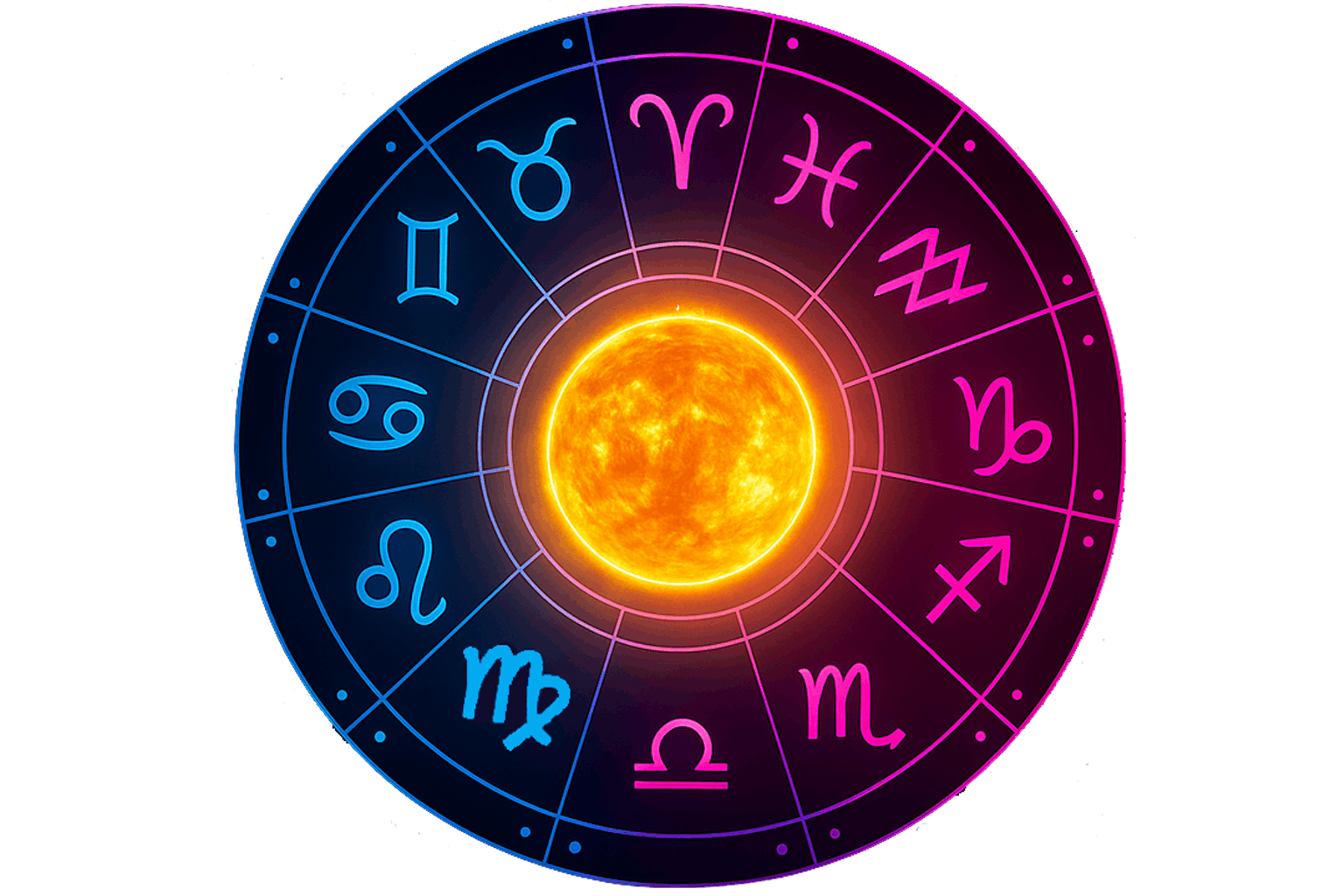
Fire, Earth, Air and Water are the four elements used to classify the twelve zodiac signs in Western astrology. Each element groups three signs that share a broad symbolic approach to life. Fire is associated with action and expression, Earth with practical concerns, Air with thought and communication, and Water with feelings and emotional responses.
These categories offer a way to compare signs without treating all twelve as completely unrelated. They are also useful when studying a birth chart, where several signs and planetary placements contribute to the overall interpretation.
The elements are not scientific personality categories. They belong to the symbolic language of astrology. Their purpose is to organise traditional interpretations, not to determine what every person with a particular sign must be like.
What Do the Four Elements Represent in Astrology?
The four-element system has roots in ancient philosophical traditions. Western astrology adopted these categories as part of its way of describing the twelve signs. Each element represents a different type of emphasis in astrological interpretation.
| Element | Associated themes | Zodiac signs |
|---|---|---|
| Fire | Initiative, expression and enthusiasm | Aries, Leo, Sagittarius |
| Earth | Practical matters, resources and stability | Taurus, Virgo, Capricorn |
| Air | Ideas, communication and social exchange | Gemini, Libra, Aquarius |
| Water | Emotions, sensitivity and attachment | Cancer, Scorpio, Pisces |
Every element includes three signs, but those signs do not express the element in exactly the same way. Their modalities, planetary rulers and individual positions in a birth chart add important distinctions.
Fire Element: Action, Initiative and Expression
Fire Signs
Aries · Leo · Sagittarius
Fire is associated with movement, enthusiasm, initiative and the desire to express something outwardly. In astrology, this element is often connected with the impulse to begin, take a position, pursue an interest or make an idea visible.
Its emphasis is on engagement rather than observation alone. A Fire-sign placement may be interpreted through a willingness to participate, compete, lead or explore. Depending on the chart, this can appear as direct action, creative performance or a strong interest in personal beliefs and experiences.
How the Three Fire Signs Differ
Aries is a cardinal Fire sign. Its association with initiative is often expressed through starting tasks, responding quickly and approaching challenges directly. The emphasis is on the first move.
Leo is a fixed Fire sign. Its symbolism is more closely associated with sustained creative expression, recognition and maintaining a strong sense of personal identity. The emphasis is on giving an activity a recognisable style and presence.
Sagittarius is a mutable Fire sign. Its traditional themes include exploration, education, philosophy and the search for broader experiences. Its expression often involves testing ideas through travel, study or exposure to different viewpoints.
When Fire Is Less Balanced
In traditional interpretations, Fire's less constructive expressions can include impatience, overconfidence, unnecessary competition or acting before considering the consequences. A person may become so focused on getting something started that the details receive less attention.
These descriptions are symbolic possibilities, not inevitable traits. Other placements in the chart may modify how Fire-related themes are expressed.
Earth Element: Practicality, Resources and Results
Earth Signs
Taurus · Virgo · Capricorn
Earth is associated with the tangible side of life: resources, work, physical surroundings, routines and the results of effort. In astrological interpretation, this element deals with how plans are put into practice and how people manage what is available to them.
Earth placements are often considered when examining attitudes towards security, organisation, possessions and responsibilities. Their symbolism places attention on what can be maintained, measured, developed or used in everyday circumstances.
How the Three Earth Signs Differ
Taurus is a fixed Earth sign. Its traditional associations include material security, comfort, possessions and sensory experience. Its symbolism often concerns maintaining what has value rather than changing direction without a clear reason.
Virgo is a mutable Earth sign. Its themes include analysis, practical adjustments, organisation and attention to detail. Virgo is commonly associated with examining how a process works and identifying what needs correction.
Capricorn is a cardinal Earth sign. Its symbolism is connected with responsibility, professional structures, long-term objectives and the organisation of effort. It is often considered in discussions about authority and established systems.
When Earth Is Less Balanced
Earth symbolism can become overly focused on security, measurable outcomes or familiar arrangements. Its difficult expressions may include excessive caution, rigidity or reluctance to consider an approach that has not been tested before.
A practical outlook can be useful, but astrology does not suggest that every decision should be judged only by immediate results or material value.
Air Element: Ideas, Communication and Perspective
Air Signs
Gemini · Libra · Aquarius
Air is associated with the exchange of information, reasoning, language and social connections. Its astrological symbolism concerns how ideas are developed, compared and communicated.
Air placements are often examined in relation to discussion, learning, observation and the ability to consider different viewpoints. This element also has a strong connection with relationships formed through shared interests, conversation and intellectual exchange.
How the Three Air Signs Differ
Gemini is a mutable Air sign. Its symbolism centres on curiosity, information gathering and the movement between subjects. It is often associated with questions, conversation, writing and learning through varied experiences.
Libra is a cardinal Air sign. Its traditional themes include partnership, negotiation, fairness and social interaction. Its symbolism often involves comparing positions and finding ways for people to deal with one another.
Aquarius is a fixed Air sign. It is associated with ideas, collective concerns, group structures and independent viewpoints. Its symbolism may involve maintaining a principle or examining how systems could operate differently.
When Air Is Less Balanced
Air's difficult expressions can include overthinking, detachment from practical concerns or remaining occupied with discussion without reaching a decision. In some interpretations, a strong emphasis on analysis may also make emotional responses harder to recognise.
This does not mean that Air signs lack feelings. It describes the element's symbolic emphasis on thought and exchange rather than emotional processing.
Water Element: Emotional Responses, Memory and Sensitivity
Water Signs
Cancer · Scorpio · Pisces
Water is associated with feelings, memory, attachment and responses to personal experiences. In astrology, it is used to interpret how someone relates to emotional situations, develops trust and responds to the atmosphere around them.
This element is not limited to romantic relationships. Its symbolism also includes family connections, private concerns, emotional boundaries and the personal meaning attached to past experiences.
How the Three Water Signs Differ
Cancer is a cardinal Water sign. Its traditional associations include home, family, care and personal security. Its symbolism often concerns establishing a sense of belonging and responding to the needs of close relationships.
Scorpio is a fixed Water sign. Its traditional themes include emotional intensity, privacy, trust and shared resources. It is often interpreted through the way people handle vulnerability, loyalty and situations involving control or uncertainty.
Pisces is a mutable Water sign. Its symbolism is associated with imagination, compassion, artistic sensitivity and the ability to respond to subtle emotional impressions. It is also considered in relation to unclear boundaries and idealisation.
When Water Is Less Balanced
Water's more difficult expressions may include holding on to past experiences, taking situations personally or struggling to maintain emotional boundaries. Some interpretations also associate this element with withdrawing when feelings become difficult to communicate.
Emotional sensitivity does not automatically indicate weakness or poor judgement. Its expression depends on the complete chart and the circumstances being considered.
How Elements and Modalities Work Together
The four elements describe broad qualities shared by groups of signs. Modalities describe how each sign approaches activity, continuity and change. Every zodiac sign belongs to one element and one modality.
The three modalities are cardinal, fixed and mutable. Each modality contains four signs, with one sign from every element. Combining the two systems helps explain why signs belonging to the same element can still have different approaches.
| Element | Cardinal | Fixed | Mutable |
|---|---|---|---|
| Fire | Aries | Leo | Sagittarius |
| Earth | Capricorn | Taurus | Virgo |
| Air | Libra | Aquarius | Gemini |
| Water | Cancer | Scorpio | Pisces |
Cardinal signs are associated with initiating activity. Fixed signs are associated with maintaining or developing what has begun. Mutable signs are associated with adaptation and transition.
Consider the Fire signs: Aries is cardinal, Leo is fixed and Sagittarius is mutable. They share Fire symbolism, but the modality gives each a different emphasis. This is one reason why describing all three simply as energetic or outgoing misses important distinctions.
You can explore this classification in more detail in our guide to Cardinal, Fixed and Mutable Signs.
Element Compatibility in Astrology
Traditional Western astrology often compares elements when discussing relationships between zodiac signs. Fire and Air are generally considered compatible because their symbolic qualities are thought to support one another. Earth and Water are also commonly grouped together in traditional compatibility interpretations.
These associations provide a starting point, not a verdict about a relationship. A Fire sign and an Earth sign, for example, may have different priorities around speed, planning or risk. That difference does not automatically make the relationship unsuitable.
Sign compatibility is only one part of relationship astrology. A more detailed comparison may examine the Moon, Venus, Mars, Ascendant and planetary aspects in both birth charts. The houses and connections between the two charts may also be considered.
It is therefore misleading to decide whether two people can build a lasting relationship using their Sun signs or elements alone.
Understanding Element Balance in a Birth Chart
A birth chart contains several planetary placements, and each zodiac sign belongs to one of the four elements. Astrologers sometimes examine how those placements are distributed to identify which elements receive greater emphasis.
For example, a chart with several planets in Earth signs may be interpreted as placing considerable emphasis on practical concerns, organisation or material responsibilities. A chart with several placements in Air signs may bring more attention to communication, ideas and social exchange.
The interpretation depends on which planets are involved. The Sun and Moon are usually given considerable attention, while personal planets and slower-moving planets contribute different kinds of information. Some astrologers also consider the Ascendant and chart ruler.
Important: A simple count of planets in each element is not a complete birth chart interpretation. The importance assigned to individual placements varies between astrological methods. Having fewer planets in one element does not mean a person lacks the qualities associated with it.
Are Zodiac Elements and Astrology Houses the Same?
No. Elements classify zodiac signs, while houses represent areas of life in a birth chart. They are separate parts of the astrological system.
The twelve signs are divided into four elements: Fire, Earth, Air and Water. The twelve houses, on the other hand, are calculated using birth time, geographic location and a chosen house system.
Some traditional astrological teaching materials compare the first, fifth and ninth houses with Fire themes; the second, sixth and tenth with Earth; the third, seventh and eleventh with Air; and the fourth, eighth and twelfth with Water. These are symbolic correspondences, not a rule that assigns those houses to every sign or every person's birth chart.
For example, Aries is a Fire sign, but Aries does not automatically occupy the First House in every birth chart. The Ascendant and house calculation determine the actual arrangement.
To understand the subject separately, read our guide to the Twelve Astrology Houses.
Frequently Asked Questions
Which zodiac signs belong to the Fire element?
Aries, Leo and Sagittarius are the three Fire signs in Western astrology. They share Fire symbolism but belong to different modalities: cardinal, fixed and mutable respectively.
Can a person have more than one dominant element?
Yes. A chart may have a noticeable emphasis on two or more elements. Astrologers may compare the Sun, Moon, planets and other important chart factors rather than relying on a single placement.
Does my Sun sign determine my element?
Your Sun sign belongs to one of the four elements, but it does not describe the distribution of elements throughout your complete birth chart. Other planetary placements may belong to different elements.
Are two signs from the same element always compatible?
Not necessarily. Sharing an element can indicate similar symbolic qualities, but it does not guarantee agreement or a successful relationship. A fuller compatibility interpretation considers additional chart placements and aspects.
Can a birth chart have very little of one element?
Yes. A chart may contain fewer planetary placements in one element than in others. Astrologers may interpret this as a less emphasised area of the chart, not as proof that the person cannot express those qualities.
Why are the elements used in Western astrology?
The four-element system provides a way to group the twelve signs according to broad symbolic qualities. It helps astrologers compare signs and examine patterns across a birth chart.
Using the Four Elements to Study a Birth Chart
The four elements offer a broad way to understand how Western astrology groups the zodiac signs. Fire focuses on initiative and expression, Earth on practical matters, Air on ideas and exchange, and Water on emotional experience.
Their meaning becomes more useful when considered alongside modalities, planetary placements and houses. Looking at these parts together gives a more complete view of the chart than assigning a personality description based on one sign alone.
Disclaimer: Astrology is a traditional interpretive system and is not scientifically established as a method for determining personality or predicting events. This article is provided for educational and entertainment purposes only. It should not replace professional medical, legal, financial or psychological advice.